Journal #20: Favorite Style of Clothing

One of my absolute favorite styles we covered in the class is the dresses that were worn in the 50s. I love love love a-line dresses and fit and flare dresses. I think they are so cute and flattering and I’m glad they are still around today.

Here is an example of a modern-day 50s inspired wedding dress. I think it’s super cute!
https://www.junebridals.com/1950s-vintage-wedding-dresses.html
Here is an authentic 50s style, a-line dress.
https://www.pinterest.com/pin/218495019396360491/

Journal #19: Style Tribes in the 20th Century

Although there were many style tribes of the 20th century, hippies and greasers were two of my favorites to learn about. Hippies wore loose, flowing clothing with fun prints, like paisley. Headbands, fringe, vests, and tie-dye were also popular among hippies of the 60s. Greasers were prevalent in the 50s and 60s. “The Outsiders” is a great movie that was made in the 80s that depicts the lifestyle that greasers had and what their style was. Often times, they wore rolled up jeans, with tight white tee shirts and black leather jackets. The term “greaser” comes from the greasy-looking hair they had.

One style tribe I can think of that we have today is “athleisure”. Workout clothes that look like regular clothes are very popular. People wear things like hoodies, leggings, etc. in a way where they are portrayed as everyday clothing, instead of athletic wear. Below is an example:

Journal #18: Late 20th Century Morgue

This is an image of “Twiggy” from the 1960s. She was a famous model, known for her thin figure. Here is is wearing a short dress with a high neckline, a popular style in the 60s.
https://condenaststore.com/featured/3-portrait-of-twiggy-bert-stern.html
These men are wearing disco shirts and pants. Though the disco trend was short, it was very popular in the 70s. The style includes patterned shirts with flared pants.
https://vintagedancer.com/vintage/70s-disco-fashion/
This is an image of two famous 90s supermodels, Cindy Crawford and Claudia Schiffer wearing the grunge style of the 90s.
https://thefashiontag.com/2012-grunge-trend-are-the-90s-back/

Journal #17: Early 20th Century Morgue

These women are “flappers” from the 20th century. They have cut their hair into a shorter style, and are wearing rectangular dresses that show off the lower half of their legs.
https://www.tes.com/teaching-resource/-updated-flappers-and-changes-for-women-in-america-during-the-1920-s-11680585
Dresses were shorter and smaller in the 40s in order to conserve fabric due to the war.
https://vintagedancer.com/1940s/what-did-women-wear-in-the-1940s/
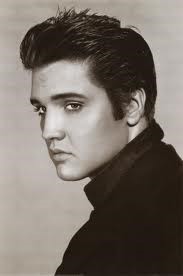
Many men in the 50s and into the 60s greased their hair, so they were referred to as “greasers”. Elvis was one of the largest icons who wore this hairstyle.
https://whitfieldenglish8s4.wordpress.com/2014/10/31/elvis-the-original-greaser-by-maddy/

Journal #16: The Fashion Reform of the Late 19th Century

What was considered fashionable in the late 19th century went through some pretty drastic changes, especially for women. Feminists, educators, and doctors all began to realize that the current styles might not be all that great for women’s health. This is when constricting clothing, such as stiff corsets and uncomfortable stockings were modified and worn less. A few styles of clothing that came of of the movement include: pants for women (finally!), and shorter hemlines. These things were often worn together at this time, since it was not “proper” yet for women to show their legs.

Journal #15: 19th Century Morgue

This is Beau Brummell – a “dandy” from the 19th century. You can see that he is very fashionable for the time and concerned with how he looks.
https://www.britannica.com/biography/Beau-Brummell-English-dandy

Underpinnings were very important when it came to the rapidly changing styles of the 19th century.
http://www.illinoisstatemuseum.org/content/%E2%80%9Ctales-vault%E2%80%9D-features-19th-century-fashion-june-13
The man in the middle is wearing what many men in the 19th century wore – a waistcoat with breeches.
https://www.agefotostock.com/age/en/Stock-Images/Rights-Managed/DAE-10110773

Journal #14: Beau Brummell

Beau Brummell was an English Dandy, meaning he was concerned with the way he looked and how he presented himself, fashion wise. He dressed very well and was a “fashion icon” when it came to men’s fashion in the 19th century. Beau led the trend of men wearing understated clothing that was delicately decorated. It is said that it took him up to five hours to get dressed in the morning and that he is the one who introduced the look of a men’s modern suit.

Johnny Depp at the Pirates of the Caribbean Premiere in Shanghai, China

I think a modern-day Beau could be Johnny Depp. Although I feel like he isn’t explicitly concerned with fashion, I think he is aware of it and does his best not to fit in any certain mold. He isn’t too out-of-the-box with his fashion choices, but he does have an edgy side and is slightly different than the typical male celebrity.

Journal #13: 18th Century Morgue

Mantua gowns were a very popular dress style among women in the late 17th/early 18th Century.

https://www.metmuseum.org/art/collection/search/81809
This picture focuses on a stomacher – a removable piece of cloth that would go in the center of many 18th Century dresses that was usually decorated with things like floral designs and ribbon or bows.

https://thepragmaticcostumer.wordpress.com/2013/05/07/an-appetite-for-fashion-decadence-a-brief-history-of-stomachers/
This is an example of a “pannier dress”, a dress that had the width of it widened with undergarments that helped to extend the sides of the dress.

https://fashionhistory.fitnyc.edu/panniers/

Journal #12: 17th Century Morgue

Here is an example of what a 17th Century Puritan couple would wear – very basic, simple, dark-colored clothing.

https://www.thomaswatson.com/lot/portrait-of-a-17th-century-puritan-couple-oil-on-canvas-laid-on-board-framed-30cm-23-5cm/
This is a painting of a Royalist in 1643. As you can see, his clothing is much more elaborate and brightly colored than the Puritan couple.

https://www.pinterest.com/pin/430867889334497479/

This is a child from the 17th Century who is religious, which is why her clothing is more toned-down compared to many of the other dresses that were worn, such as mantua gowns. The silhouette is still the same as what an adult would wear, though.

http://www.pennsburymanor.org/miniature-models-dressing-children-in-17th-century-england-and-the-colonies/

Journal #11: Puritans vs Royalists

The royalists dressed in highly-decorated, stylish clothing that featured many bright colors. They enjoyed themselves and liked to be dressed in the finest clothing. Puritans, on the other hand, wore more simplistic and dark-colored clothing without much decoration. The Puritans believed that this style of clothing showed that you had a pure heart. The basis for these differences can be traced back to the kinds of people found in each group. Also, since the Puritans were Protestants who wanted to simplify worship, and the Royalists were people who supported the monarchy, each side tended to show their personalities and what they supported through their clothing – Puritans being more simple, and Royalists being more sophisticated.